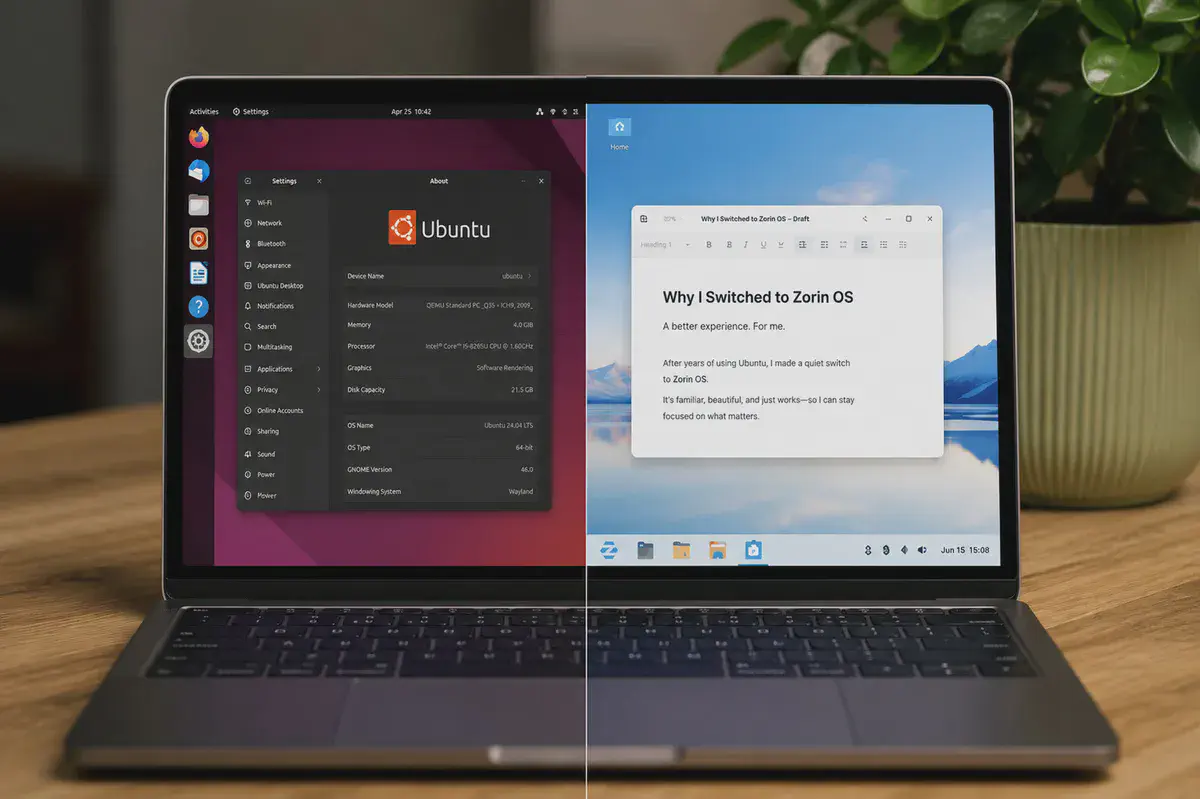
I started with Ubuntu sometime around 2010.
And like most Linux users, I didn’t stay in one place for very long.
I tried:
- different desktops
- different distributions
- different workflows
Some lasted weeks.
Some lasted months.
In the beginning, I kept expecting Linux to behave like Windows. Looking back, that expectation caused more frustration than Linux itself - a lesson I explore in Linux Isn’t Hard — It’s Just Different.
But Ubuntu was always the thing I came back to.
It was:
- stable
- well documented
- easy to recover when something broke
For a long time, that was enough.
Then somewhere along the way, I realized something:
I was spending more time adjusting Linux than actually using my computer.
Not because Ubuntu was bad.
Mostly because I kept treating Linux like a project.
So when Zorin OS 16 came out, I tried it without expecting much. I didn’t replace my system immediately. I tried it first from a live USB to see how it felt.
What changed #
Underneath, it still felt like Ubuntu.
Because it is - Zorin is built on Ubuntu LTS.
It still had the same:
- package manager
- software support
- documentation
- tutorials
But the experience around it felt calmer.
The desktop stayed out of my way.
I didn’t spend time tweaking themes.
I didn’t reorganize panels.
I didn’t immediately start “fixing” the interface.
I installed it and started working.
Basically, I was just… using my computer.
That sounds small.
It wasn’t.
After years of using Linux, I stopped caring about finding the “best” distribution.
I started caring about friction instead.
That’s the real thing that changed for me.
Not:
- performance
- package managers
- benchmarks
Mental friction.
Why Zorin felt easier to live with #
Ubuntu’s GNOME workflow makes sense once you learn it.
A lot of people genuinely love it.
But Zorin matched the habits I already had.
- Taskbar at the bottom
- Open windows visible immediately
- Applications exactly where I expected them
I stopped thinking about the desktop completely.
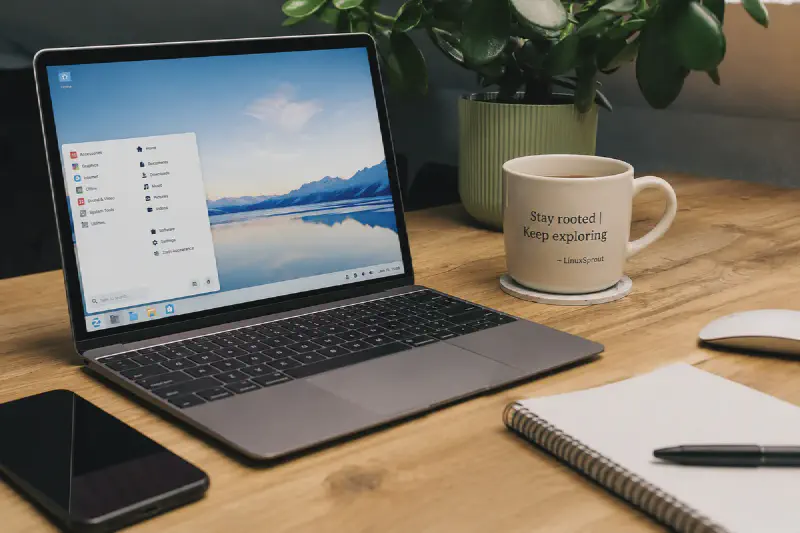
And honestly, that’s probably the highest compliment I can give an operating system.
What surprised me most #
What surprised me most was realizing how little actually changes between distributions once you’ve used Linux for a while.
Beginners often think changing distros means relearning everything.
That reminded me of 7 Things That Surprised Me When I First Used Linux, especially how different everything felt at first.
Usually it doesn’t.
Most of the time, you’re just changing where the friction lives.
Ubuntu asks you to adapt to its workflow.
Zorin tries to adapt to yours.
Neither approach is wrong.
I just reached a point where I preferred the second one.
So I stayed.
Why I stayed #
Not because Zorin was magical.
Not because Ubuntu failed me.
I just got tired of fighting the interface when all I really wanted was to use the computer.
Finally #
These days I don’t spend much time thinking about the distribution anymore.
If my computer helps me do what I opened it to do, that’s enough.
Looking back, I think that’s what I was after all along.
If this helped, you might like future notes like this.